
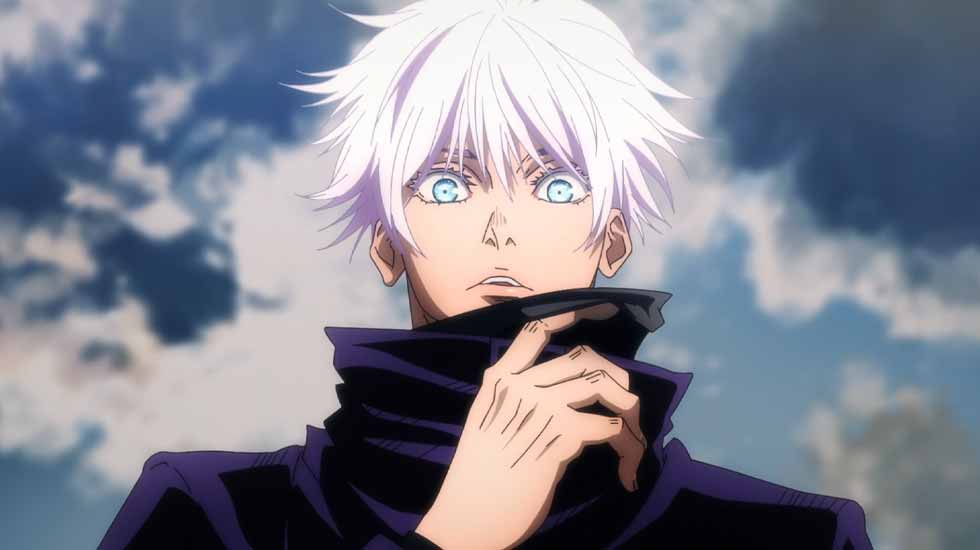
Despite being the source of the person who was at the pinnacle of the jujutsu society the Gojo clan remains shrouded in mystery.
Unlike the Zenin and Kamo clans, two other pillars of the Jujutsu world, the Gojo family is rarely mentioned, leaving fans to speculate about their fate and the strength of its members.
However, we have received more information regarding them thanks to a recent bonus booklet about Satoru Gojo in which Gege Akutami answered about 30 questions regarding the character.
Who Are Gojo Satoru’s Parents? Are They Alive?
According to author Gege Akutami, Gojo Satoru’s parents are indeed alive. Satoru was their only child.
Their status within the Gojo clan elevated significantly due to their son’s birth, placing them in a position of high regard.
However, their abilities as Jujutsu sorcerers are notably lacking. This discrepancy led to a separation between Gojo and his parents at a young age, as they couldn’t be involved in his training.
His unique status and treatment by his family resulted in limited interaction with his relatives.
The names of Satoru’s parents or any other information regarding their identities have not been revealed. I guess it will be too much to expect them to make an appearance, even after their son’s demise.
It’s clear that while the Gojo name carries weight, not every member of the clan possesses extraordinary powers.
What Happened to the Gojo Clan in Jujutsu Kaisen?
The Gojo clan’s historical roots trace back to Michizane Sugawara, one of Japan’s revered Big Three Vengeful Spirits. During his time, he was also a big shot in the Jujutsu world.
This lineage was cited as instrumental in explaining the immense cursed energy possessed by Gojo Satoru.
The Gojo clan’s main family home (headquarters?) is in Kyoto, as revealed by Akutami. This is also where Satoru hails from. We are shown this house in one of Toji’s flashbacks where he went to check out the young prodigy.

He was also the head of the clan until his death or probably his sealing (since he was exiled from Jujutsu world after that).
It is often misunderstood by many that the Gojo clan came to prominence because of Satoru (thank you Ino). It was also assumed that the Gojo clan won’t be very powerful unless they had a Six Eyes + Limitless user.
However, that’s not true.
Despite the clan being labeled a “one-man army” due to Gojo Satoru’s unparalleled strength, they have maintained their influential position within the Jujutsu world for quite some time.
Sugawara’s significant influence in the Jujutsu world undoubtedly shaped the clan’s legacy to begin with. But they seemed to have maintained their status as one of the big three ever since then.
They also had special training regiments for their members in jujutsu and also in general education as they were part of the big three.
In fact, Satoru is said to have received special treatment and spoilt rich because of his abilities. This is very similar to how the Zenin clan valued those with talents in their family, suggesting that the big three families weren’t any different from each other.
Even after Satoru was sealed and later exiled from the Jujutsu world due to his perceived involvement in the Shibuya incident, the Gojo clan was involved in the politics to remove Zenin clan from the big three families following Maki’s massacre.

This suggested the clan’s power and authority extending beyond the influence of Gojo Satoru himself.
They also actively supported Megumi Fushiguro’s claim to the head of the Zenin clan, due to his close ties with Gojo Satoru. These instances show they had a considerable sway in the jujutsu world.

This confirmed that other members of the Gojo family were alive and active politically behind the scenes.
Other trivia:
In the past the heads of Gojo and Zenin clans clashed in a duel witnessed by the aristocracy, sparking a long-standing feud between the two families.
This event, estimated to have occurred during the Edo or Keicho periods, ended with both the clan heads perishing.









![[Exclusive] The Great Indian Anime Show: The Journey Behind India’s First Ever Anime Talk Show](https://animehunch.com/wp-content/uploads/2026/01/Analyst6-150x150.webp)