
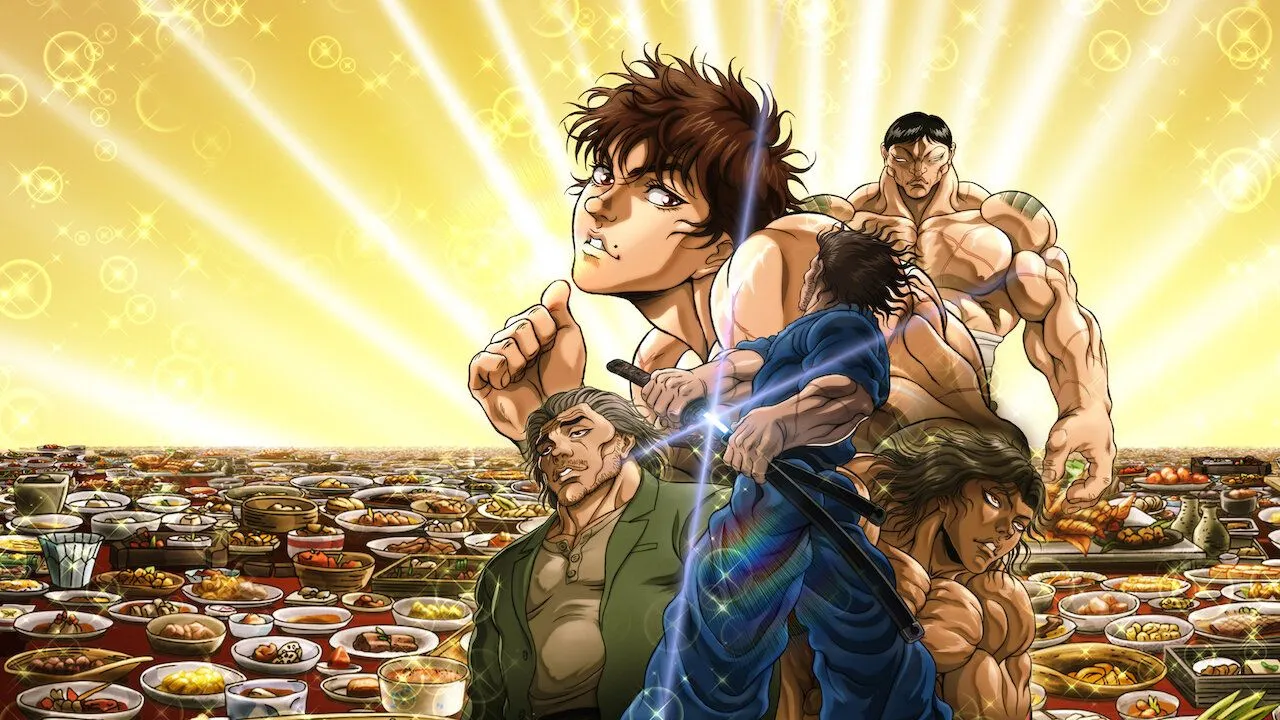
In the eight years since Baki made its Netflix debut, the martial arts series has established itself as one of the platform’s major action franchises. With the release of Baki-Dou Cour 2, the anime tackled one of its most ambitious storylines yet, pitting the series’ martial artists against a titan of history: legendary Niten Ichi-ryu master Musashi Miyamoto.
Following this release, Animehunch team had the opportunity to interview the anime’s producer Kei Watabiki, who reflected on the challenges of adapting the arc, the franchise’s long-running journey, and the meticulous care required to bring Keisuke Itagaki’s original vision to life.
The producer also discussed preserving the quintessential “Baki-ness” of the series despite modern production constraints, the show’s evolving global partnership with Netflix, and what remains in store as the franchise looks toward the future.
Check out the full interview below.
Now that Cour 2 of Baki-Dou is available globally on Netflix, what are your immediate thoughts on the conclusion of the Musashi Miyamoto arc?
Watabiki: To be honest, the ending of the Musashi Miyamoto arc left a certain heavy resonance rather than a clean, exhilarating resolution. If the Pickle arc was a confrontation with pure “wildness,” then the Musashi Miyamoto arc is a confrontation with pure “martial spirit.”
Musashi did not return to the present of his own will; he was a being summoned forth by humanity’s insatiable quest for “the strongest,” and I feel that this ending, including the very unfairness of that, is something that cannot be captured by wins and losses alone.
In an extreme battle where life and death hang in the balance, how does a person face their own life, their opponent’s life, and life itself? What answer will Baki arrive at to this profound question? I would be delighted if fans around the world could enjoy it in full, right down to the lingering resonance that goes beyond a simple win or loss.
As a producer, what role did you play in ensuring that Keisuke Itagaki’s vision and story were perfectly translated to the screen, despite the constraints of modern animation schedules?
Watabiki: Delivering the work to fans around the world who are looking forward to it, and conveying its appeal to future fans who don’t yet know Baki – I consider that an important mission. On top of that, my role was to make sure the entire production team could always hold on to a shared standard for judging “what makes something feel like Baki.”
There are of course constraints on time and budget, but I will never make a choice that sacrifices that “Baki-ness” for the sake of efficiency. Conversely, it isn’t a work that gets better simply by dressing it up or adding things whenever there’s room to spare.
Through producing the series up to now, I’ve come to truly feel that lavish techniques don’t necessarily lead to good results. Whenever hesitation arose, guiding the team toward the goal without straying from that “Baki-ness,” that, I think, was a surprisingly important role.
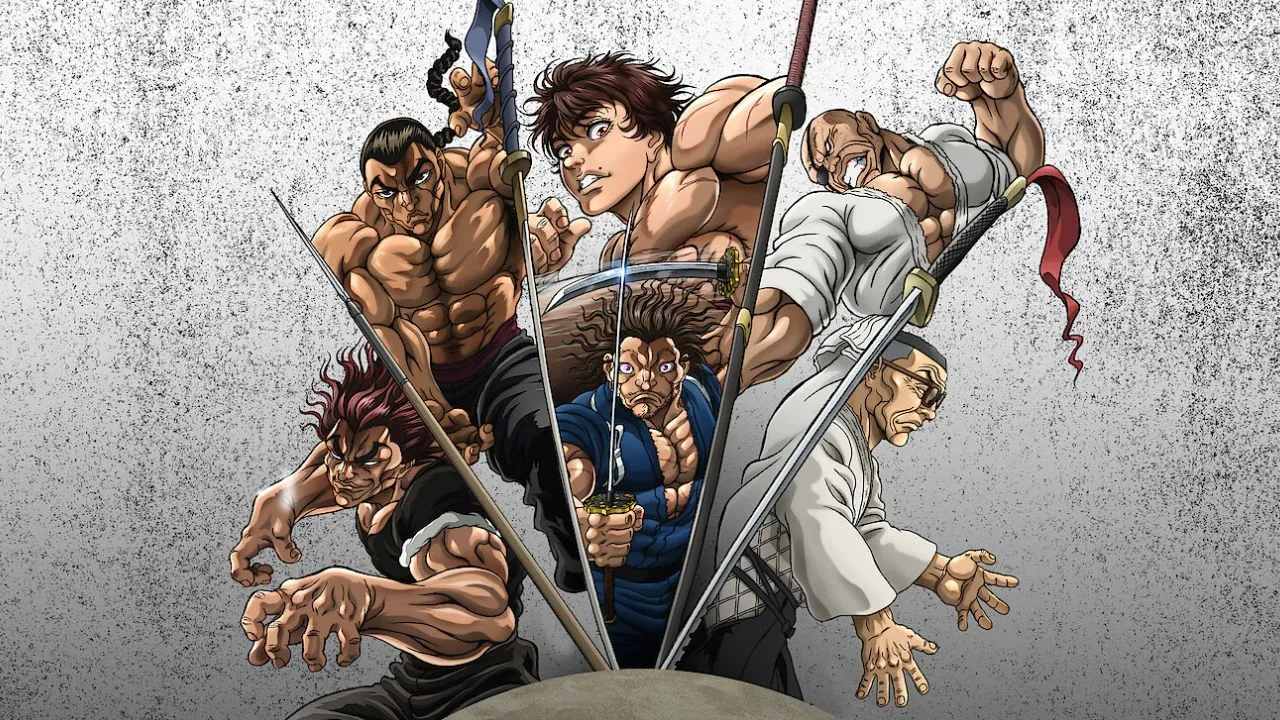
Director Toshiki Hirano has been involved in the show since the start of the Netflix adaptation and returns to his role for Baki-Dou as well. What made you choose him to lead the anime adaptation?
Watabiki: Director Hirano has an exceptionally rare gift: he can sharply grasp the essence and themes of the source material and reconstruct them as visuals.
For Baki, a major reason I chose him was my sense that he would create visuals that fans of the original manga could be satisfied with.
This isn’t a work that comes together just by making the action flashy; what matters greatly is where to move, where to hold still, and which moment to show with the most force. Director Hirano’s instinct for this is remarkably precise.
Without filling in the gaps or over-polishing more than necessary, he is always thinking about how to make the sheer density of Itagaki-sensei’s original work function as animation. In that sense, Director Hirano is truly a director who can translate that “Baki-ness” into visuals.
Given that the team behind Baki-Dou spent almost two years bringing the series to life, what challenges did the animation staff face while adapting Miyamoto’s Niten Ichi-ryū style and the weapons-based combat that serves as a highlight of this part?
Watabiki: Baki is, needless to say, a monument of the fighting-manga genre, and we have always cared deeply about how to convey the impact of unarmed combat – punches, kicks, throws, holds. Into that world, Musashi Miyamoto appeared bearing weapons.
As a fundamental premise, the standard we worked from was, above all, Itagaki-sensei’s original work. Rather than having the anime side reinterpret “Niten Ichi-ryu” on its own, the major challenge was how to realize on screen the “who Musashi Miyamoto is” and “what Niten Ichi-ryu is” that Itagaki-sensei portrayed in the original.
For example, within a range where the blade may or may not reach, how do we show the fighting spirit bearing down from Musashi? How do we bring out, across the entire frame, the terror of facing Musashi who wields a weapon? That, I think, was the major challenge in expressing it as animation.
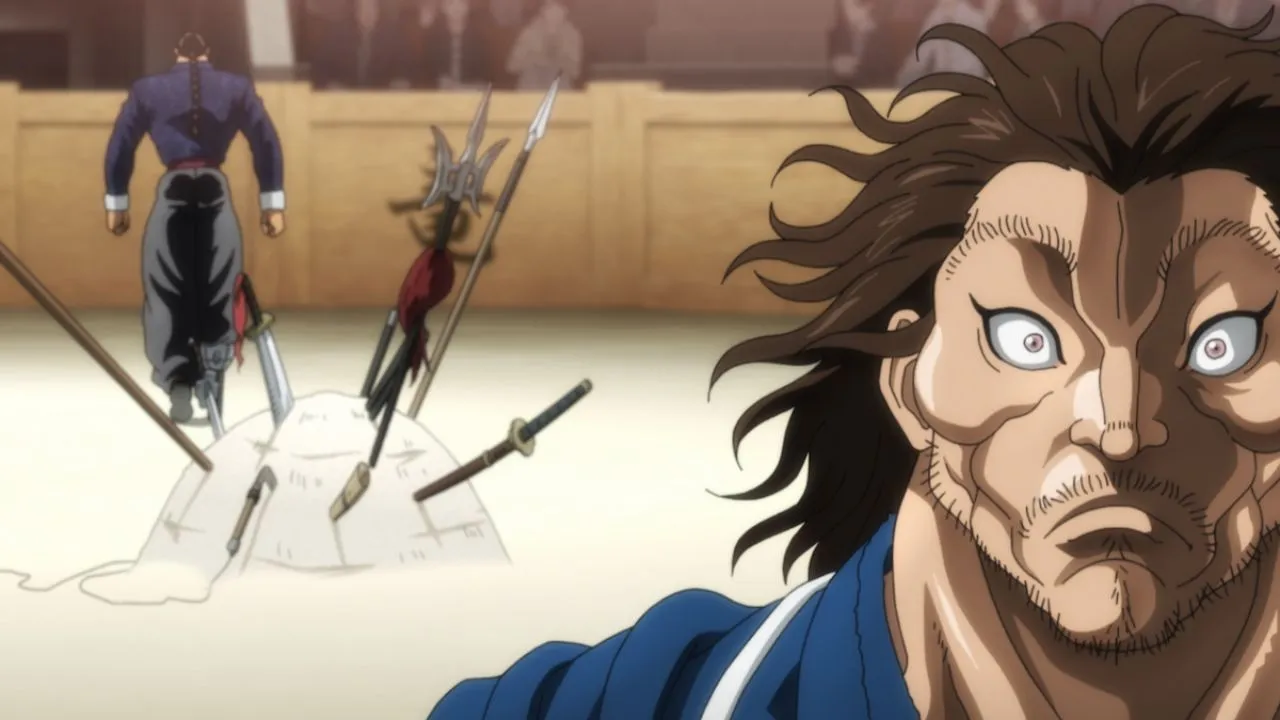
From a production perspective, what are the advantages and challenges of partnering with Netflix?
Watabiki: At the time we formed the partnership, I think there were two major advantages. One was that we could launch simultaneously around the world, meaning Baki could reach not only Japan but passionate fans across the globe. There’s no doubt this contributed greatly to the work’s recognition later on.
The other was the freedom of expression, which was especially important in adapting Baki’s Most Evil Death Row Convicts arc. In that arc, we needed to properly convey the weirdness and danger of the death row convicts, and being able to deliver it without greatly compromising the expression of the original was a major advantage. I feel Netflix continues to be a good partner for the Baki series.
At the same time, Netflix has grown from a streaming platform for core users into an enormous media presence. As that happens, it is increasingly called upon to show consideration for a wider range of users and to bear social responsibility.
As creators, we too are interested in how it will balance creative expression with its responsibilities as a global platform going forward. As for Baki, it will remain important to cherish the core of the work while delivering its intensity to fans around the world.
Following the initial adaptation in 2018, we are now in 2026, and Baki has become a series deeply beloved by fans. What are your thoughts on the journey of the anime so far, including the recent Baki-Dou adaptation?
Watabiki: Being able to continue the series all the way to Baki-Dou is something I’m truly grateful for. There was a lot of trial and error in the first series, but as we built things up together with the director, the cast, and the animation staff, our way of making Baki as a team gradually took shape.
Having originally enjoyed Itagaki-sensei’s manga myself, I feel that with each new installment I’ve come to understand that Baki-ness more deeply. And the fact that the work has reached fans not only at home but overseas, and that we now receive so many responses, has been a great encouragement to us on the production side.
These days, overseas fans are the very first to leave comments on videos uploaded to platforms like YouTube. We’ve been able to come this far, without a doubt, thanks to all the Baki fans around the world who support us.
Finally, what message do you have for the fans of the series and can you tell us something about the future projects in the Baki franchise?
Watabiki: I’m deeply grateful to everyone who has supported the Baki series over so many years. How do we deliver the intensity and power of Itagaki-sensei’s original work on screen? That’s something we’ve grappled with earnestly every single time. Baki-Dou is distinctive and challenging even within the series, and I’m glad you stayed with it all the way to the end.
There’s a limit to how much of our plans I can share at this point, but one thing I can say for certain is that Baki still has so much appeal left to deliver. Going forward, we want to keep bringing fans around the world that quintessentially Baki sense of astonishment and excitement that transcends all logic!
Baki-Dou anime is currently streaming on Netflix. Make sure to check it out!



![[Exclusive] The Great Indian Anime Show: The Journey Behind India’s First Ever Anime Talk Show](https://animehunch.com/wp-content/uploads/2026/01/Analyst6.webp)







![[Exclusive] The Great Indian Anime Show: The Journey Behind India’s First Ever Anime Talk Show](https://animehunch.com/wp-content/uploads/2026/01/Analyst6-150x150.webp)