
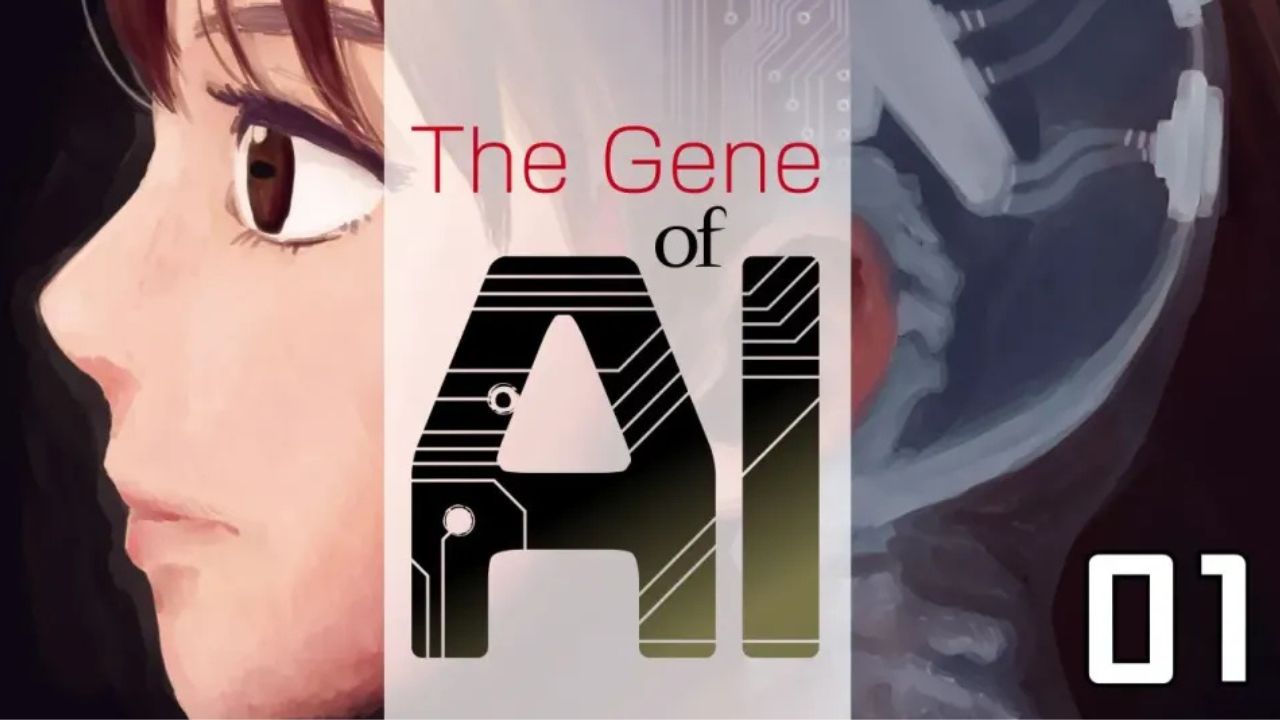
Digital manga platform emaqi released the first ever official English translation of Kyuri Yamada’s science-fiction manga The Gene of AI (also known as Ai no Idenshi) earlier this year in May.
In light of that development, Animehunch spoke with Akita Shoten editor Ichiro Miyazaki about the series’ international expansion which took place a decade after its original release.
Miyazaki, a member of the Monthly Shōnen Champion Editorial Department who joined Akita Shoten in 2016, brings a decade of industry experience to the discussion. In addition to The Gene of AI, he has also worked on prominent titles, which include Darwin’s Game, Yowamushi Pedal, Baki-Dou, and BEASTARS.
In this conversation, Miyazaki talked about why this was the right time to introduce the series to overseas audiences and delved into Yamada’s narrative and how the manga, despite being over 10 years old, is resonant with the current technological landscape.
Set in a near-future society where humans and highly advanced humanoids coexist, The Gene of AI follows Dr. Hikaru Sudo, who is a specialized physician operating a unique medical clinic dedicated solely to treating the physical and psychological ailments of beings with Artificial Intelligence.
The series is episodic and each case explores the ethical dilemmas his patients face, ranging from technological issues to emotional tuning and identity crises. Through these intimate narratives, the story aims to examine the everyday struggles of AI and the blurring boundaries of what it means to be human.
The following piece has been edited for grammar and flow.
The Gene of AI originally debuted in 2015 and was adapted into a successful 2023 anime. Now, more than a decade after its initial serialization, the manga is finally reaching Western audiences. What was the thought process behind releasing this series to North American readers now?
Miyazaki: Artificial Intelligence (AI) is currently the subject of active discussion across North America. Against that backdrop, the team at emaqi took notice of the series and reached out to Akita Shoten, noting that there was already a manga that had been exploring AI for more than ten years. That interest became a major catalyst for this English-language release.
Among the many manga published in Japan, only a small fraction ever receive official English translations and The Gene of AI was one of the many titles that, until now, had not yet had the opportunity to reach readers overseas. So to finally see it happen makes me genuinely happy!
What makes emaqi the perfect platform for The Gene of AI’s English debut?
Miyazaki: There is something I personally hold very close to heart: the belief that I am always working with people, not with companies.
Through my experiences with anime adaptations, live-action adaptations, and many other projects, I have worked with a wide range of companies, but what I have come to believe is that the size of a company is not what makes something great. What matters is how much passion each individual brings to their work. That applies equally to manga artists and creators. What I value most is how far we can push the quality of the work.
With that in mind, manga artists often place less emphasis on a company’s brand or reputation than on whether they can imagine creating something truly meaningful with a particular editor. I feel the same way. That is why I approach my work with the mindset that I am collaborating with the people within a company, rather than with the company as an organization.
Orange, the company behind emaqi, may still be relatively young as an organization, but the people working there have shown a level of passion and drive that goes beyond what you might expect.
What impressed me most, beyond that energy, was the thoughtfulness they bring to truly understanding each work. Both the author and I have been in remarkably close and frequent communication with the Orange team.
I have a strong sense that emaqi is only going to keep growing from here.
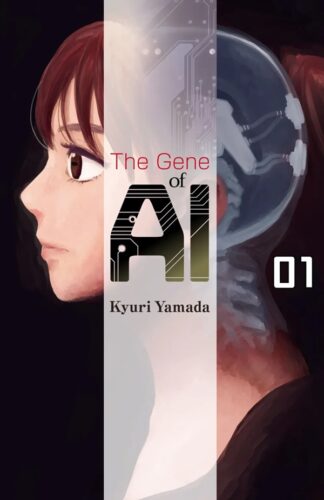
The Gene of AI was never originally conceived as an ongoing series. It was planned as a one-shot story. But the editor-in-chief found it so compelling […] that it grew into the series it is today.
Taking you back to the very beginning, what was the editorial team’s initial reaction when The Gene of AI was first pitched? What aspect of Yamada Kyuri sensei’s story convinced Akita Shoten that it needed to be published?
Miyazaki: The Gene of AI is a near-future medical science fiction series, but what the entire editorial team finds most compelling is the way it asks the essential question -“What does it mean to be human?”- through intimate medical stories that feel close to our own lives.
In the series, AI characters struggle and suffer just as humans do. Is it acceptable to alter an AI’s emotions? Is there any fundamental difference between a romantic relationship or family bond involving AI and one between humans? These questions are explored carefully and thoughtfully through a different patient’s case in each episode.
What many people may not know is that The Gene of AI was never originally conceived as an ongoing series. It was planned as a one-shot story. But the editor-in-chief found it so compelling that he came back and said, “This is too good to end here, keep writing.” And so it grew into the serialized series it is today.
Yamada-sensei had previously worked as a journalist covering the IT industry, which meant he already had a deep familiarity with the field of artificial intelligence. That background gave the editorial team confidence that he could bring a real sense of authenticity to stories involving AI and that belief ultimately led to the green light for the series.
Now, Akita Shoten has published massive hits like Beastars, Saint Seiya: Next Dimension — Myth of Hades, and Baki The Grappler. From an editorial standpoint, where do you rank or position The Gene of AI compared to these other popular titles?
Miyazaki: As the editor in charge, I genuinely feel that The Gene of AI is a rare and carefully crafted work. What I find so appealing is the balance Yamada-sensei strikes between a gentle, humanistic perspective on people and a deep curiosity about technology.
The titles mentioned are already beloved by many people around the world, and since they span different genres, and I personally was also involved in the anime adaptation of BEASTARS, I’m afraid a direct comparison wouldn’t quite be fair.
That said, I believe The Gene of AI has the same kind of long-term potential as an IP. It is a series that continues to grow in value in Japan even today, and I truly hope it receives the global attention it deserves.
As the editor in charge, I genuinely feel that The Gene of AI is a rare and carefully crafted work. What I find so appealing is the balance Yamada-sensei strikes
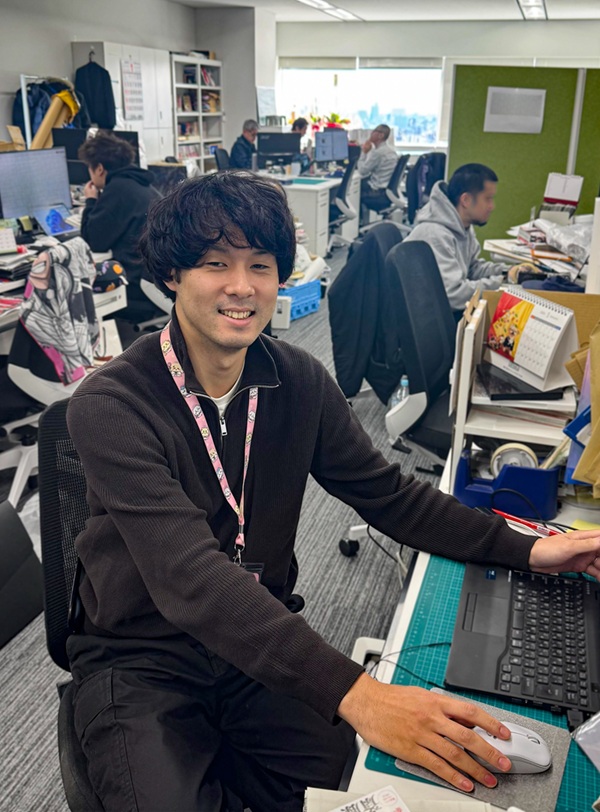
– Ichiro Miyazaki (seen in the accompanying image)
The Gene of AI released at a time when advanced artificial intelligence felt like a distant science fiction to the readers. Now that AI is increasingly becoming a part of our reality, are readers perceiving it differently today compared to when it was launched?
Miyazaki: You’re absolutely right. AI has become a much more familiar presence in our daily lives. As readers will discover, the climaxes of the stories are deliberately written not to push a single answer, such as “this is what you should do” or “this is the right choice.” Instead, the series is designed to invite readers to think for themselves.
Because of that, I have the impression that the way readers receive the series is beginning to shift, with more people thinking, “Could this really happen in the near future?”
Personally, precisely because AI is advancing so rapidly today, I hope readers will not forget the importance of thinking for themselves. Thinking is what has always driven humanity forward. It is also a free space that no one can take away from you. It is one of the greatest strengths we have.
In a world where AI can instantly give us answers to almost anything, I hope readers will continue to value the process of arriving at an answer, not just the answer itself.
What is the main message or feeling the editorial department hopes North American readers will take away from the manga?
Miyazaki: I hope readers come away feeling that no matter how much technology advances, what matters most in the end is the desire to understand others, and the love we show one another. I would be very happy if readers experienced the series as a story about identity and take away a sense of warmth from it.
In North America, there is already such active discussion around AI ethics and the possibility of AI developing human-like emotions. That is exactly why I believe the inner lives of the troubled humanoids portrayed in The Gene of AI, and the doctors who care for them, will feel fresh, timely, and deeply moving to readers.
Now that The Gene of AI has been released, will its sequel series too be available on emaqi soon?
Miyazaki: It has, yes! As for the sequel, nothing has been decided just yet, but if readers respond positively to the series, a sequel could certainly be possible.
More than anything, what would make us happiest is for people to read the work. Even if it is just one chapter, or even a single page, we would be truly grateful if readers gave it a try.
Finally, is there any message you want to give to the new readers of The Gene of AI manga? Also, thank you for making time to have this conversation with us.
Miyazaki: Thank you so much for reading this far. I truly hope that audiences will embrace the series with the same enthusiasm — both as a work of thoughtful science fiction and as an exploration of diverse identities. And because it is structured as an anthology, it is easy to pick up even for those with busy lives! I am confident that The Gene of AI is a work that will spark your imagination.
The Gene of AI manga is currently available to read on emaqi!





![[Exclusive] The Great Indian Anime Show: The Journey Behind India’s First Ever Anime Talk Show](https://animehunch.com/wp-content/uploads/2026/01/Analyst6.webp)







![[Exclusive] The Great Indian Anime Show: The Journey Behind India’s First Ever Anime Talk Show](https://animehunch.com/wp-content/uploads/2026/01/Analyst6-150x150.webp)