

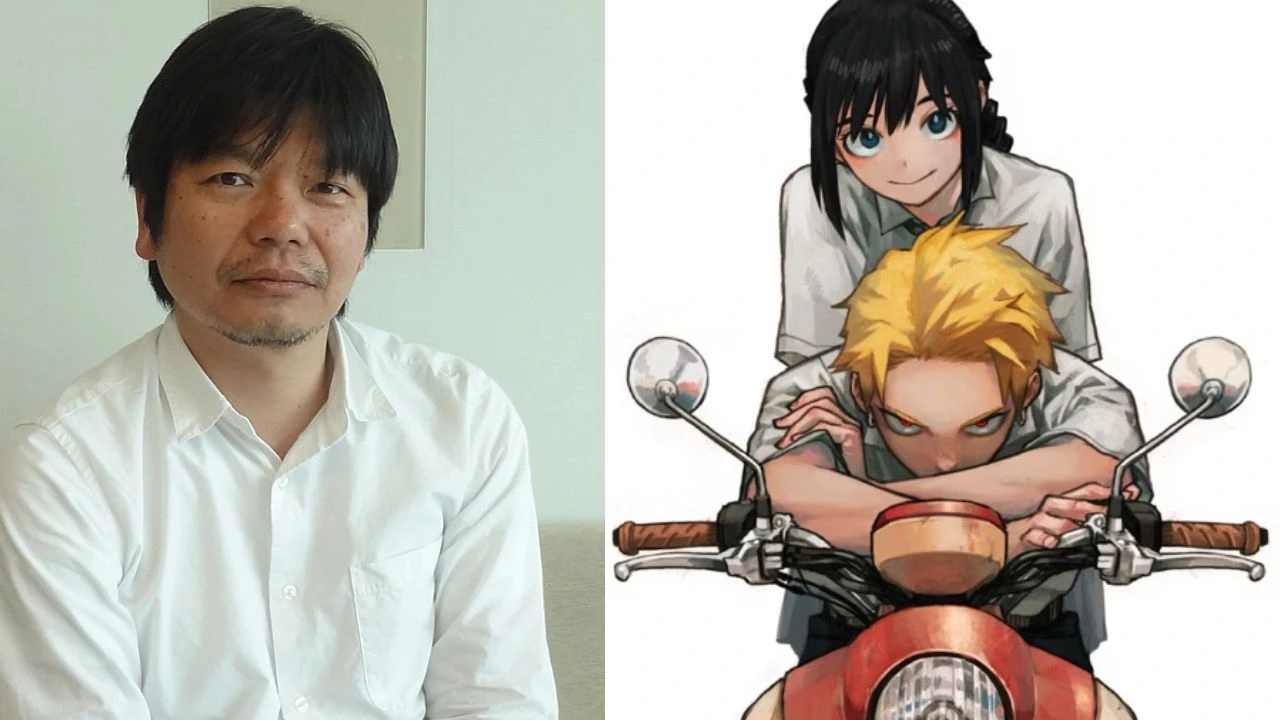
In a media landscape often dominated by narratives of conflict and division, popular Japanese author Makoto Yukimura, creator of the globally acclaimed manga Vinland Saga, has championed the themes forgiveness in his epic work.
And while not professing Christian faith himself, Yukimura talked about the influence of the Bible and the series’ central theme of forgiveness, in a recent interview with Le Figaro.
These themes within Vinland Saga were not artificially imposed but rather organically developed as Yukimura grappled with depicting a society with values vastly different from his own.
Vinland Saga charts the transformative journey of its protagonist, Thorfinn, amidst the backdrop of a violent Viking-era Europe.
Yukimura provided a stark illustration of the Viking ethos he aimed to capture, recounting a disturbing anecdote of a Viking banquet where a minor offense – perceived grease from a beard on a shared drinking cup – led to lethal violence.
This anecdote underscored the deeply ingrained “warrior-like tendencies” of the era, setting the stage for the manga’s exploration of an alternative path.
It is against this backdrop of pervasive violence that the series’ central theme of forgiveness emerges as particularly potent. And the character of Hild, a young woman who remarkably forgives Thorfinn for the murder of her father, stands as a powerful embodiment of this transformative grace – a concept Yukimura himself connects to biblical teachings.
While Vinland Saga has multiple references to the Bible, Yukimura stated that his engagement with the Bible stemmed from “personal interest rather than religious conviction.“
He explained, “I found its message of love and forgiveness truly remarkable. I believed that the spread of Christianity at the time may have helped soothe warrior-like tendencies.”
Initially a warrior consumed by vengeance, Thorfinn undergoes a major character development, which ultimately leads him to embrace pacifism – seeking a world devoid of violence. However, in order to do so, he first had to tackle the complex and contradictory nature of violence.
He explained that it is “completely different to refuse violence on principle and to refuse it because you know it intimately.” And in Thorfinn’s case, the character had to experience this violence up close so that he would understand the merit of peace and forgiveness.
“In order for Thorfinn to become a pacifist who seeks to solve problems in a non-violent way, he had to be intimately convinced of the merits of his approach,” he said. “I abhor violence but I cannot deny that it arouses fascination in some people… However, I asked myself how I wanted to show it: stripped of any aesthetic aspect or in its most total crudeness?”
The author’s nuanced perspective on violence lends significant weight to Vinland Saga‘s exploration of forgiveness. As visible from Thorfinn’s journey, this isn’t a simplistic or idealistic solution, but a challenging and essential alternative forged in the face of brutal realities he faced.
Yukimura underscored the contemporary urgency of this message, asserting, “Today’s world needs this notion of forgiveness more than ever, as it is often neglected or even scorned.”














![[Exclusive] The Great Indian Anime Show: The Journey Behind India’s First Ever Anime Talk Show](https://animehunch.com/wp-content/uploads/2026/01/Analyst6-150x150.webp)