

An independent third-party investigation into the Jojin Kamen controversy revealed that Japanese publisher Shogakukan Inc.’s Manga One repeatedly and willingly enabled convicted sex offenders to publish under secret pseudonyms while ignoring victim grievances and bypassing internal legal oversight.
The 106-page report, chaired by former superintending prosecutor Toshihiko Itami, detailed systemic corporate governance breakdowns across Shogakukan’s digital comic application Manga One, which led to major human rights failure.
The independent committee found that editors at Manga One operated with unchecked authority under the concept of “editorial rights,” allowing individual editors-in-chief to approve creators without executive oversight.
Furthermore, legal and risk management divisions were completely neutralized and excluded from digital publishing decisions.
Shogakukan also failed to maintain cross-departmental risk checks, excluded freelancers from internal whistleblowing hotlines, and routinely destroyed harassment committee investigation records during annual staff rotations.
The committee examined 14,183 digital records and conducted 62 interview sessions with 48 people before filing their findings.
These findings followed public exposure of author Shoichi Yamamoto, who was secretly re-employed to write the manga Jojin Kamen under the pen name “Hajime Ichiro” (IchiiIchi) after being convicted of sex crimes against a minor.
Interestingly, Shoichi Yamamoto itself is a pen name used by the author, whose real name is Kazuaki Kurita.
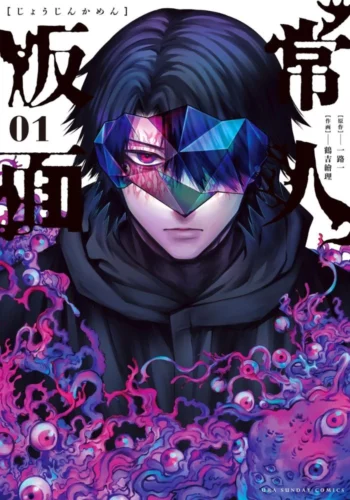
Investigation Details Findings on Shogakukan’s Jojin Kamen Controversy:
According to the report, Yamamoto was arrested in February 2020 and received a criminal fine under the Child Pornography Act for sexual acts committed against an underage high school student while working as a teacher. Yamamoto was serializing Daten Sakusen on Manga One at the time.
Both Yamamoto’s editor and Manga One’s editor-in-chief were aware of this incident, but they still chose to resume the manga’s serialization after a short pause. When the victim called Shogakukan in March 2020 to object to his work continuing, executives suspended Daten Sakusen.
However, editorial staff secretly maintained monthly advance payments to Yamamoto for unreleased chapters written during the hiatus.
In May 2021, Yamamoto’s editor at Manga One joined a private LINE messaging group between Yamamoto and the victim. The editor actively drafted civil settlement terms, demanded non-disclosure conditions. He also explicitly linked Yamamoto’s monthly settlement payment capacity to Shogakukan reinstating his series.
The investigation panel concluded that the editor’s intervention exerted improper commercial pressure on the victim, making Shogakukan complicit in ongoing human rights harm.
Concurrently, the editor arranged for Yamamoto to write Jojin Kamen under the pseudonym “Ichiichi,” securing approval from Manga One’s Editor-in-Chief without board or legal review.
The publisher then hired an illustrator without disclosing Yamamoto’s criminal past or civil disputes.
Though Shogakukan canceled Daten Sakusen in September 2022 following a civil lawsuit from the victim, it launched Jojin Kamen three months later.
The secret arrangement lasted until February 2026, when the Sapporo District Court ordered Yamamoto to pay 11 million yen in damages for abusing his authority as a teacher.
Widespread news coverage prompted social media posts exposing as Yamamoto and revealing the editor’s settlement involvement, forcing Shogakukan to halt Jojin Kamen and issue a corporate apology.
Independent Committee Slams Shogakukan’s Actions:

The committee delivered a scathing evaluation of Shogakukan’s behavior, concluding that the publisher’s actions constituted direct “facilitation and complicity” in ongoing human rights violations.
The panel ruled that paying Yamamoto advance fees, intervening in civil negotiations, and commercially masking his identity under a pseudonym protected the abuser economically while inflicting further distress on the victim.
They also criticized Shogakukan’s initial crisis handling, noting that early responses lacked clear legal authorization and unified executive command.
The independent investigation uncovered similar practices elsewhere in the company. Manga One also secretly hired Act Age author Tatsuya Matsuki, who was convicted in 2020 of street sexual assaults against underage girls, to write Seiso no Shinrisi under the pseudonym “Hatsu Natsuki.”
Shogakukan’s light novel imprint, Gagaga Bunko, had previously rejected Matsuki’s work due to reputational risks. Manga One ignored that assessment and published the series anyway, reflecting a total lack of cross-departmental coordination.
The committee recommended mandatory human rights screening for creator contracts, legal veto power over editorial decisions, and independent whistleblowing channels accessible to all external partners.
Source: Shogakukan Investigation Committee Report














![[Exclusive] The Great Indian Anime Show: The Journey Behind India’s First Ever Anime Talk Show](https://animehunch.com/wp-content/uploads/2026/01/Analyst6-150x150.webp)