

The Japan Fair Trade Commission (JFTC) released a sweeping investigative report this week identifying systemic business practices within the animation industry that may constitute illegal violations of the Antimonopoly Act and the Subcontract Act.
The report, which was based on data collected from an extensive survey by the JFTC, highlighted a pervasive culture of “illegal transactions,” including the widespread failure to issue written contracts, unpaid remuneration for rework, and the forced transfer of copyright without compensation.
While it is common knowledge that labor and structural issues have long persisted within the anime industry, the JFTC report highlights that government intervention might be necessary to resolve the disparity that currently exists.
To establish the scale of these market issues, the commission conducted an exhaustive inquiry into the sector. The investigation, which ran throughout 2025, synthesized data from three distinct channels to penetrate the industry’s notoriously opaque supply chain.
The JFTC distributed questionnaires to 417 production companies, receiving valid responses from 130 studios, and canvassed over 1,900 freelancers, yielding 165 detailed responses.
In addition to the quantitative data, the commission held in-depth qualitative hearings with 75 entities—including 34 production companies, 14 production committee investors, and 16 individual creators.
A direct “information submission form” launched in January 2025 further corroborated the findings, gathering 219 specific reports of potentially illegal conduct from across the film and anime sectors.
Table of Contents
The “Start Now, Sign Later” Practice
The survey uncovered a critical procedural flaw that the JFTC warns may constitute a violation of the Subcontract Act. This centers on the precarious practice where studios commence work without a finalized contract—meaning they operate without any legal protection or guaranteed payment terms if disputes arise.
The survey data indicated that 45.3 percent of main anime studios (also known as prime contractors, who take the main order directly from the investors) did not receive a written contract until after they had already started production. In some cases, the contract was not issued until after they had finished the job completely.
Only 15.1 percent of the main studios reported receiving a written contract that listed the pay and the work details at the time they accepted the order.
Commission officials emphasized that this significant delay forces studios into a severely weak negotiating position. Because they have already committed resources and spent money on production, they are effectively backed into a corner, compelled to accept unfavorable terms just to ensure they get paid and keep their business running.
Under Article 3 of the Subcontract Act, companies are legally required to issue written orders immediately. The JFTC report noted that the failure to set terms before work begins likely constitutes an “Abuse of Superior Bargaining Position” (a legal term describing when a powerful company bullies a smaller partner because the smaller partner has no other choice).
Undisclosed Fees and Unpaid Labor
The report also revealed a disconnect between rising market demand and studios shutting down, a phenomenon the report characterized as a “profitless boom.” Interestingly, this is not the first time that such co-relations have been found.
While 86.8 percent of main anime studios reported that production fees (the budget studios receive from the production committee to animate a series) had increased over the last ten years, 60 percent of these studios revealed they suffer operating losses (spending more money to make the anime than they earn from it) if they rely solely on those fees.
According to the studios surveyed, three primary factors contribute to these losses despite the rising fees:
- Increasing Demands: 77.4 percent said “increasingly high quality demands” drove up costs. TV series now require “movie-quality” visuals, which demand significantly more labor hours and technical resources per scene.
- Schedule Extension: 74.2 percent pointed to “longer production periods.” When schedules stretch out beyond the original plan, studios must still pay rent and staff salaries without receiving any extra money to cover the extended time.
- Inflation: 67.7 percent reported that they were unable to pass on the rising costs of labor and materials to the committee (the group of investors funding the project).
On top of this financial strain, unpaid reworks emerged as a critical issue affecting monetary gains. The survey found that 83 percent of main studios faced additional costs because of reworks (redoing scenes to fix mistakes or change the style) or schedule delays, which are all too common in anime production.
However, only 13.6 percent of these studios were paid in full for this additional labor. A staggering 22.7 percent of studios reported receiving “no payment at all” for these costs. The JFTC flagged this practice as potentially illegal under current trade laws.
This issue creates a damaging domino effect throughout the industry. Because the main studios are not getting paid for this extra work, they often lack the funds to pay the subcontracting studios (smaller, specialized studios hired by the main studio to handle specific tasks like background art or CGI).
Interviews cited in the report highlighted that production committees often classified subjective quality changes as “corrections of defects.” By labeling them as mistakes, they force studios to pay for the changes themselves.
One respondent noted that vague instructions like “make it cuter” resulted in hours of unpaid rework that the studio had to absorb.
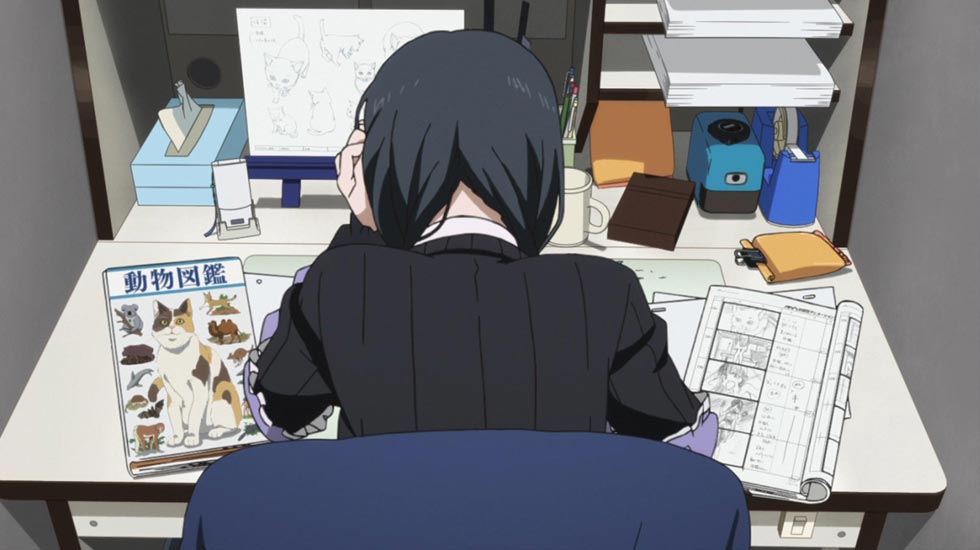
Copyrights and the “Inclusive” Fee
In addition to labor issues, the commission looked into the industry’s handling of intellectual property rights, which revealed that 84.9 percent of studios handed over all copyright to the production committee upon completion of the project.
While 39.6 percent of respondents said they were “often paid” for this transfer of rights, further probing revealed that this payment was typically “included in the production fee” rather than being a separate, clearly defined payment.
The JFTC warned that if the base production fee barely covered the actual cost of manufacturing the anime (as evidenced by the 60 percent of studios operating at a loss), then the copyright transfer was effectively happening for free.
The report suggested this practice likely constitutes an Abuse of Superior Bargaining Position, as studios are being stripped of a valuable long-term asset without receiving distinct compensation for it.
How Pressure Flows Down to Smaller Studios & Freelancers
The report detailed how pressure from the top (production committees) rolled down to subcontracting studios and freelancers.
While compliance regarding contract timing was slightly higher for subcontractors (45.3 percent subcontractors received contracts at order placement as opposed to the 15.1 percent of prime contractors), financial squeezing remained prevalent.
The survey found that 26.6 percent of subcontracting studios reported payment delays longer than the legal 60-day limit. This often happened because main studios delayed payments while waiting for money from the committee.
Furthermore, 3.1 percent of subcontractors reported experiencing unilateral fee reductions (one-sided cuts to their pay made by the client) after the work was already completed.
Although 75.0 percent of subcontracting studios noted that their fees had essentially gone up over the last decade, 34.4 percent reported operating losses on production fees alone, and 67.2 percent expressed dissatisfaction with current pay levels.
Consequently, the ability for these smaller subcontracting studios to negotiate better terms was severely restricted. The survey noted that 57.8 percent of subcontracting studios felt their fees were determined entirely by the client’s budget limit, leaving them little room to bargain for a fair price.
The survey further highlighted that freelancers, who make up 50 to 70 percent of the workforce, were especially vulnerable to these systemic issues.
Despite the enforcement of the Freelance Act, oral contracting remained common. Only 38.9 percent of freelancers received written terms at the start of a project, while 16.0 percent received them only after they had finished the work.
The lack of detailed written contracts left creators exposed to “scope creep” (a situation where the job gets bigger or more complex than originally planned without any extra pay). Notably, only 9.7 percent of freelancers said that extra pay for short deadlines was discussed or agreed upon in advance.
This ambiguity led to significant amounts of unpaid labor. 44.4 percent of freelancers reported receiving short-notice “rush orders” without any extra payment. The JFTC identified this as an unfair change of transaction terms.
Additionally, 38.9 percent experienced uncompensated reworks for reasons not attributable to them. While the industry is slowly moving toward formal, binding contracts, 52.1 percent of freelancers remained unhappy with their remuneration. The vast majority cited that their fees have not kept pace with the rising cost of living and inflation.
Streaming Services and Data Transparency
The investigation also addressed the disruption caused by global streaming platforms, which typically utilize a “buyout” model rather than the traditional royalty-sharing structure.
While prime contractors acknowledged that streamers often paid higher upfront fees that covered actual production costs, this model effectively severed studios from the upstream revenue of a global hit.
The JFTC identified a lack of data transparency as a critical barrier to fair trade in this new ecosystem. Half of the prime production companies reported that viewership data, such as view counts and demographics, was “often not disclosed” or only shared upon request.
The commission stated that withholding this performance data prevented rational negotiation for contract renewals.
The report explicitly noted that it is “desirable” for providers to disclose user viewing patterns to facilitate appropriate negotiations, warning that withholding such data could constitute an Abuse of Superior Bargaining Position if it prevents a studio from accurately valuing its work.














If you look further into this, you will see that this is because of western influence, like wokeflix and crunchyroll. Japan should never have gotten involved with the west.
Source: trust me bro
Why does everyone blame everything on the west and fail to hold accountability for their own issues?
Have you seen the way that Woke policies have been ruining TV, movies and video games here in the west?
The idiots that swallow that bullshit whole put so much focus and emphasis on so-called ‘virtue signaling’, that they essentially abandon good story writing like they’re throwing out the baby with the bathwater!
Blaming things on “wokeness” is a worthless argument. This isn’t a left vs right issue. It never has been. It’s a too vs bottom world and pitting “sides” against each other is a distraction tactic by those with power to keep the people without fighting against each other so they don’t fight the actual villains. Stop letting yourself be manipulated. Wokeness by definition is just understanding the way the world works, full stop. People saying, “Hey, this is problematic” isn’t the problem. Take Dandadan as an example. Right off the bat it uses sexual assault as a plot device. That’s very much “unwoke”, but people still love the series because its characters and plot resonate with people. Did “woke” ideologies sink it? Of course not! We’re all right here excited for season 3. Do some of us go, “Hey…using the threat of rape of a highschool girl is pretty shitty”? Yeah. Because it is. Did it ruin the show? Only for those who find it so detestable they can’t support it. And with good reason! It’s fucked up! A teen girl was stripped of her clothes while aliens threatened to rape her. That’s a really shitty thing to present as a plot point. Imagine watching a young girl about to get raped and thinking, “Dude! This RULES!” It’s not unreasonable to protest that sort of shit, is it? Did it end the show? Did it get “cancelled”? No! It’s going strong because it makes up for it in other areas. “Woke” isn’t your enemy. “Virtue signalling” isn’t your enemy. You know what IS your enemy? The systems that have been put in place to underpay workers and drive division across the working class are. It’s not a Japan thing. It’s not a West thing. It’s an issue of power and greed grinding workers into a bloody paste they can consume. Stop fighting the wrong fight. This isn’t left vs right, it’s up vs down. The problem is that some people can’t see more than one move ahead, can’t see cause and effect, can’t plan three or more moves ahead. Complaining about “wokeness” is a handy shorthand for the people who CAN think critically to see those who can’t. Full stop.
Yet here you are, SaucyDoodles, proving every antiwoke guy’s point by being really annoying and virtue signaling about something risqué and provocative in a cartoon.
Yet, here you are, SaucyDoodles proving every antiwoke guy’s point by being really annoying and virtue signaling about something risqué in a cartoon.
Gene you are an idiot nothing in this article indicates any sort of woke policy is responsible for studios not getting paid enough. You seem to see woke in everything go get help I’m sure your family wishes you were not so deranged.
I see you lack reading comprehension. His woke comment was about the comment referring to “why blame the west” comment.
To Adriaan, first of all, you clearly miss the whole point of this article as this has nothing to with the larger West in general nor does it have to do anything with “Woke”. Honestly I am glad finally taking issues with these production committees and their shady practices that has gone too far unnoticed for far too long. Hopefully this may lead to meaningful reforms for a better anime industry in the coming decades to come.
Mr Nair,
Is this one of the first times the JFTC has done a review of the animation industry? On this scale?
Additionally, what are your opinions on the JFTC’s methodology for this review?
@adriaan, Do you understand that without western influence and consumption, anime would be a fraction of what it is today?
The west generates billions of dollars in revenue for Japanese (and all other types) animation.
Also, I would love to see this woke anime you speak of. A good portion of everything on Crunchyroll and Netflix has the standard mix of fan service and violence. Add to that, themes that would never get made by a “woke” western studio and your point starts to unravel.
Guys, here’s a friendly reminder not to feed the trolls
So does this mean One Punch Man season 4 will have better animation?
Season 1 was basically a passion project. With a modest budget they got it done by excellent hiring and project management. Everything I read about it made it seem like everyone working on it went above and beyond to make a quality product. When a different team picked up season 2 the magic was gone. Expecting season 4 to be better is like expecting corporations to treat their employees with love. Good luck with that. Season 1 was a fluke. A magical fluke. It was a *true* unicorn. Season 1 was the exception, not the norm. Honestly, with everything I have read about the industry at large it’s incredible that we see as much quality as we do. Animation at large is an industry kept alive by the love of the workforce. A workforce stretched so thin it’s ASTOUNDING it hasn’t snapped. The wages don’t match the skill. The artists are being worked to death. The only job I’ve worked that was as brutal as the anime industry was in a lunch meat factory.l, working 10-30 hours of overtime a week doing intensely physical work for wages barely above minimum. There, the only thing keeping it running profitably was underpaid immigrants. It’s rough for everyone working. The global economy is in a bad state. Some exceptions, sure, but overall it’s a rough time. Buckle up, it’s going to get worse. I wish the best for all of us, but that just a hopeful man’s wish and nothing more. For decades now perpetual growth in most fields has been the dominant force, and perpetual growth is impossible. Collapse is inevitable. Brace yourself for harder times. Good luck, I wish you the best. Now’s the time we need to support each other. The working class is on its own. That includes factory workers, artists, retail and office workers. Godspeed, brothers and sisters. We only get through this together.