

Shinichiro Ikeda, the CEO of Studio Deen, the animation studio behind classics like Urusei Yatsura, Konosuba, Ranma ½, has taken an unconventional stance in Japan’s anime industry—prioritizing work-life balance over long production hours, even if it means lower profits.
His policy, which enforces early work hours and discourages overtime, challenges a decades-old culture of excessive work that has plagued anime studios for years.
In a recent interview with Comic Natalie, Ikeda revealed how he introduced this drastic change after IMA Group acquired Studio Deen.
“When I was first discussing the takeover, I asked what time I should visit to see how things were run. The previous owner told me, ‘How about between 1 and 3 in the morning? That’s when the best people are at their best and most energetic.’” Ikeda recalled. “When I heard that, I first wanted to get rid of that custom.“
Reshaping Studio Deen’s Work Culture
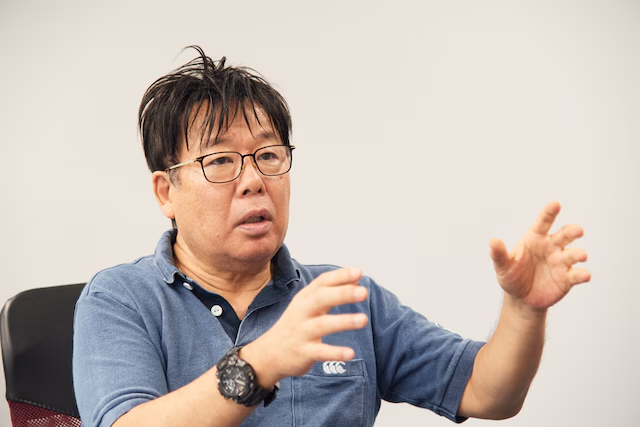
One of his proposals was the introduction of a 6 p.m. cutoff for working hours, which was a stark contrast to the industry’s typical late-night schedules.
However, resistance from executives forced him to temporarily shelve the idea. “We can’t get any work done like that,” they argued, fearing that missed deadlines would lead to financial ruin.
But Ikeda persisted. He first introduced the early-dismissal policy at IMA Group’s headquarters and later extended it to Studio Deen, despite initial opposition.
“We received strong opposition from the executives. ‘We can’t get any work done like that. If we don’t meet deadlines, we won’t be able to send footage to the TV stations, and the company will go bankrupt,’ so we gave up at first. After all, the opinions of those on the ground are important. So we decided that only the main Ima Group company would work until 6 p.m., and the rest of the work would be done the following day.“
However, Ikeda remained committed to his vision. He acknowledged that reducing work hours could lead to declining sales in the short term but insisted that prioritizing employee well-being was more important.
“Of course, it’s impossible to ‘go home early while increasing sales,’ even I can’t do that. So we made it a policy to ‘go home early even if it means lower sales’. Thanks to this, although I don’t finish work at exactly 7 p.m., I’ve started going home quite early.“
Studio Deen’s revenue dipped in the first few years after implementing the new policy. But once employees adjusted, sales began to rise again.
Ikeda noted that with limited work hours, employees became more efficient.
“Of course, sales dropped for 2-3 years after the introduction. But after that, they started to rise. This is because my brain got used to it. If you go to work at 9am and work until 11pm, everyone will think about how to allocate their stamina and do a sloppy job in the morning. But if you go home at 7pm, you’ll work 3 hours in the morning, take an hour break, and then work hard for the rest of the day. Recently, this habit has finally taken root and is functioning well.“
Ikeda also emphasized that making a profit through excessive overtime isn’t real business. His goal was to create an environment where employees could be productive within reasonable hours and get paid fair wages.
“I don’t think that having employees work overtime and make a profit is business. It’s no good if employees don’t make a profit by doing normal work. The role of a manager is to make a profit as a company and pay employees a fair wage,” he stated.
Staying Out of Creative Decisions
Beyond workplace reforms, Ikeda also adopted a hands-off approach when it came to Studio Deen’s anime productions.
While he attends management meetings, he deliberately avoids creative planning discussions, believing that excessive executive interference stifles creativity.
He cited the downfall of companies where aging presidents dictated content decisions, leading to commercial failures.
“Of course I attend management meetings, but I don’t attend other planning meetings. There were about three companies around us with sales of 30 billion yen, but they collapsed because the president was surrounded by yes-men. When a president over 70 starts interfering in planning and forcing ideas onto younger employees, the result becomes ‘zaiko’ (unsold stock). Seeing that happen, I decided more than 20 years ago that I would no longer attend planning meetings.
At first, employees were nervous about it, but they soon realized that without my presence, there was less pressure. The people on the ground know the characters 100 to 500 times better than I do. Since then, IMA Group has grown significantly, and the same applies to Studio Deen.”
Future Plans
With 2025 marking Studio Deen’s 50th anniversary, Ikeda hinted at ambitious plans. “It’s quite rare for a company to last 50 years, and I take great pride in that. That’s why I really want to do something new next year.,” he teased, without revealing specifics.
Looking ahead, Ikeda wants Studio Deen to continue expanding its global footprint. “Anime is thriving worldwide, and we need to push further internationally. Our figurines are selling well overseas, and we plan to grow that market,” he said.
Source: Comic Natalie















![[Exclusive] The Great Indian Anime Show: The Journey Behind India’s First Ever Anime Talk Show](https://animehunch.com/wp-content/uploads/2026/01/Analyst6-150x150.webp)