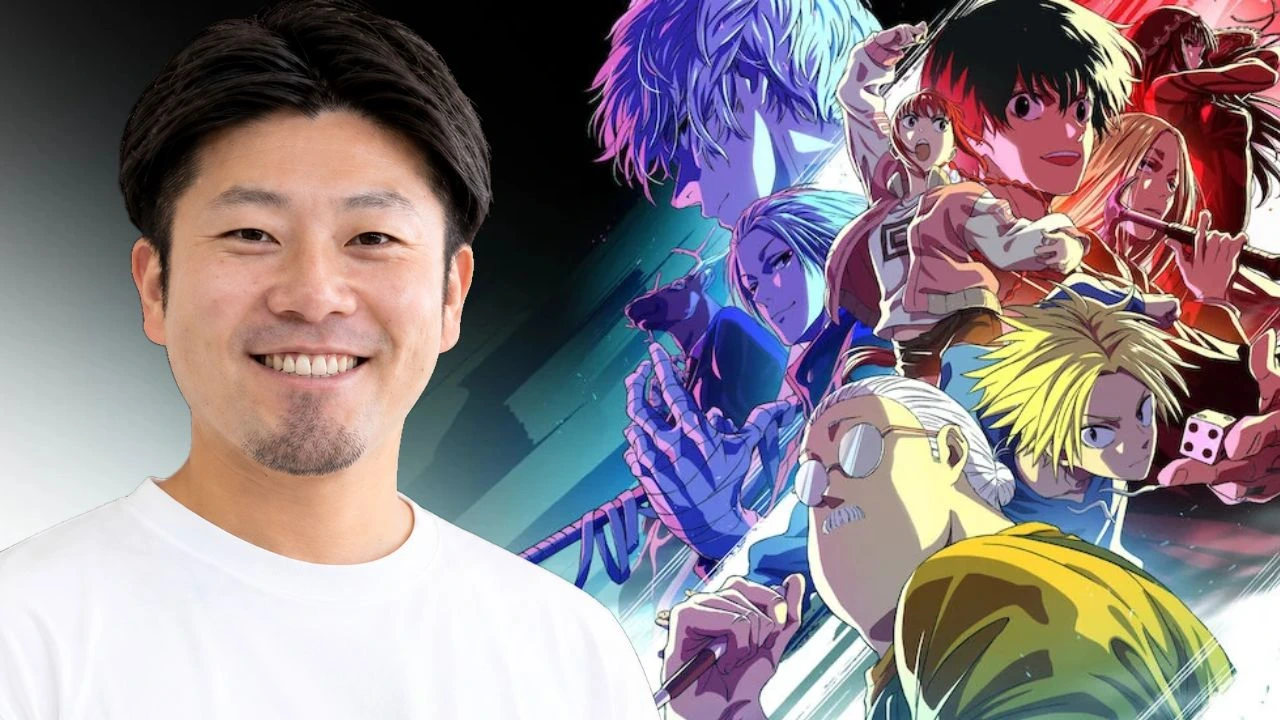
When Sakamoto Days made its streaming debut on Netflix, it took the platform’s viewing charts by storm, dominating Top 10 rankings across international markets and cementing itself as a huge hit.
However, despite its runaway popularity, the season was not without flaws.
Certain sections of the fanbase were vocal regarding the animation quality, pointing to inconsistencies in fluidity and movement during fight sequences. This was glaring vulnerability for a series celebrated for its action.
Now, it has come to light that the production team at TMS Entertainment took this as an urgent call to action.
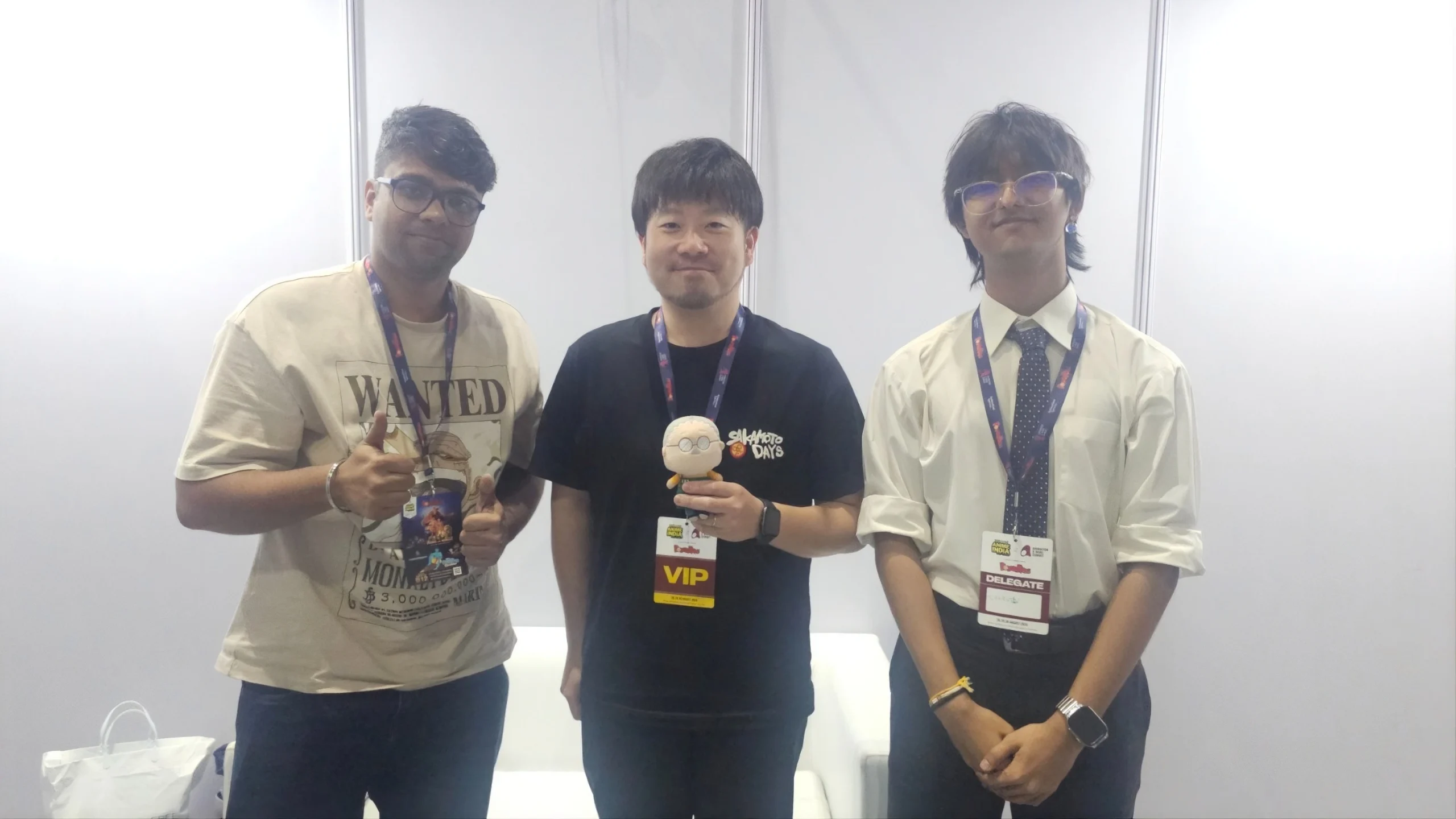
Ahead of Sakamoto Days Season 2 release, producer Ryota Hasegawa made an appearance at the Anime India event held in Mumbai.
Animehunch had the privilege of sitting down for an exclusive interview with Hasegawa-san to discuss his role in the anime’s production, along with the sweeping, ground-up overhauls being made to elevate Season 2 — including adopting animation techniques that match Demon Slayer, and even roping in a new director adept at handling action sequences.
Note: The following interview has been edited for grammar and flow. Also, huge thanks to Sharvil Mahant for interpreting Hasegawa-san’s answers.
For fans and readers of our website who might not be familiar, can you explain what exactly your role as a producer is at TMS Entertainment?
Ryota Hasegawa: As the producer for Sakamoto Days, my responsibilities are quite wide-ranging. First, developing the script; overseeing the voice recording and sound design, and, of course, the animation production itself.
On top of that, there’s the business side. Deciding where to sell the show, how to structure licensing deals, and what kinds of merchandise to sell and in what format.
Then there’s publicity and promotion. It includes working alongside the promotional producer on rollout strategies for unveiling information so audiences tune in. Broadly speaking, those are the main areas I handle.
I’m assuming that you were also involved in planning the schedule and ensuring that everything goes out in time?
Ryota Hasegawa: There is a dedicated animation line producer who handles production logistics separately, but I sit down with them to discuss and determine the overall timeframe for production.
What was the approach in setting up the schedule for Sakamoto Days anime?
Ryota Hasegawa: When setting that schedule, the most straightforward step is, first properly investing financial resources into it. And second is the staff size. These two are relatively simple, but essential.
Investing money means you can hire more animators and more support staff across production. And on the personnel side, gathering skilled talent makes a huge difference.
When you bring together highly capable people, production runs faster, and they can cover for unexpected delays that slip off-schedule. So those two factors are vital.
That said, being able to invest that kind of budget is a real privilege, and we can only do it because this is Sakamoto Days. Because it is a prominent title from Jump, we are able to secure that level of budget.
Achieving great quality almost inherently requires a strong original property to begin with, which is a bit of a dilemma in anime production today.
If an original work isn’t widely known, you can’t allocate that kind of budget, yet you’re still expected to deliver high visual quality. Navigating that dilemma is a real industry challenge right now.
Talking about Sakamoto Days’ popularity, when the anime debuted on Netflix, it became one of the most-watched shows on the platform. Was that response something producers at TMS, and especially you, expected?
Ryota Hasegawa: No, we didn’t expect that at all. We were thrilled. In India, it stayed in Netflix’s Top 10 for nine consecutive weeks.
Globally on Netflix, it was in the Top 10 for ten consecutive weeks. That’s a massive milestone. It was recognized as the best-performing anime on Netflix in the first half of the year in Netflix history, so receiving that recognition was incredibly rewarding.
When creating the anime, did you keep international audiences in mind and adjust certain elements to better appeal to them?
Ryota Hasegawa: That’s right. To sell globally, there’s a huge demand for battle action scenes in particular.
Since the quality of the battle action is so important, we’re currently using a somewhat specialized production method [different from Season 1] to improve and refine that quality.
Well, despite its popularity, there were some criticisms concerning the animation quality of action sequences in Sakamoto Days Season 1 and how they were handled in particular. So was employing this specialized or unique production method a conscious choice made in response to the criticism that was received?
Ryota Hasegawa: That’s right. That’s right. It’s true that the first season, especially the first cour, got a great response, but there were also quite a few comments saying the quality wasn’t ‘as good as expected.’
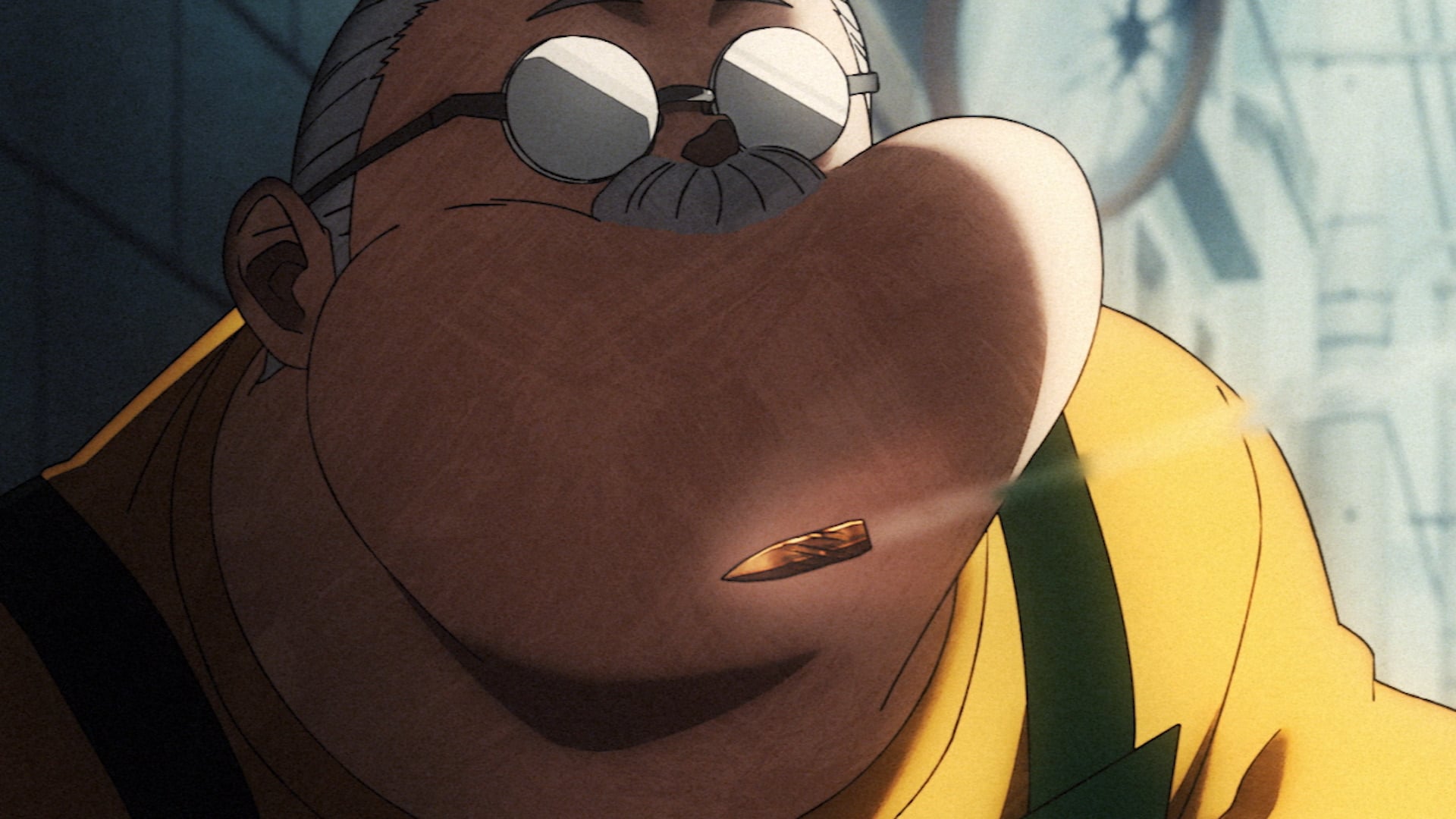
We took that feedback very seriously and realized we needed to overhaul our workflow from scratch, so we changed several major things.
First, because the demand for action scenes is so high, we create these sequences in CG and then use that as a base to create the hand-drawn animation on top of it. In other words, we adopted the same style used in Demon Slayer.
Beyond that, we doubled the number of action animators.
And third, we changed the compositing (satsuei) studio, which defines the visual touch — the final look and feel of the show.
Talking about changes in Season 2, Daisuke Nakajima-san has been roped in as the director. Was this also because of the criticisms that were there, or was there any other particular reason for choosing a new director to go into Season 2?
Ryota Hasegawa: Yes. It ties back to the action again: the reason we brought in Nakajima-san was to assign a dedicated professional action director.
Nakajima-san previously worked as an action director on Tiger & Bunny, which caught our attention, and we wanted to bring that strength to Sakamoto Days. That’s why we assigned Nakajima-san.
Were you a fan of Sakamoto Days as in, before getting into the anime part, were you a constant reader of Yuto Suzuki’s manga?
Ryota Hasegawa: Of course. I actually knew about it before serialization even started. The editor at Jump told me, ‘We have a new project like this coming out,’ so I was briefed ahead of time and had the chance to read it early.
How was your experience coming to Anime India and seeing that there are a lot of Sakamoto Days fans over here, interacting with them on the panel? How does it feel right now?
Ryota Hasegawa: Honestly, I’m really thrilled. I never imagined there would be this many attendees here who love Sakamoto Days.
Sakamoto Days Season 2 is set to release in January 2027 and will stream exclusively on Netflix, along with its television broadcast in Japan.
While Season 1 director Masaki Watanabe has been replaced by Daisuke Nakajima at the helm, Watanabe will continue to be involved with the project in a supervisory role. Meanwhile, TMS Entertainment returns to handle the animation production.
The upcoming season will adapt the manga’s JCC Infiltration Arc, which follows Taro Sakamoto and Shin Asakura as they go undercover at the Japan Clear Creation (JCC) assassin training school to track down a database holding clues to the mysterious villain X (Slur).
Given how heavily this storyline relies on actions sequences, Hasegawa’s confirmation that Season 2 is undergoing a complete production overhaul is great news for fans looking forward to the anime’s return.