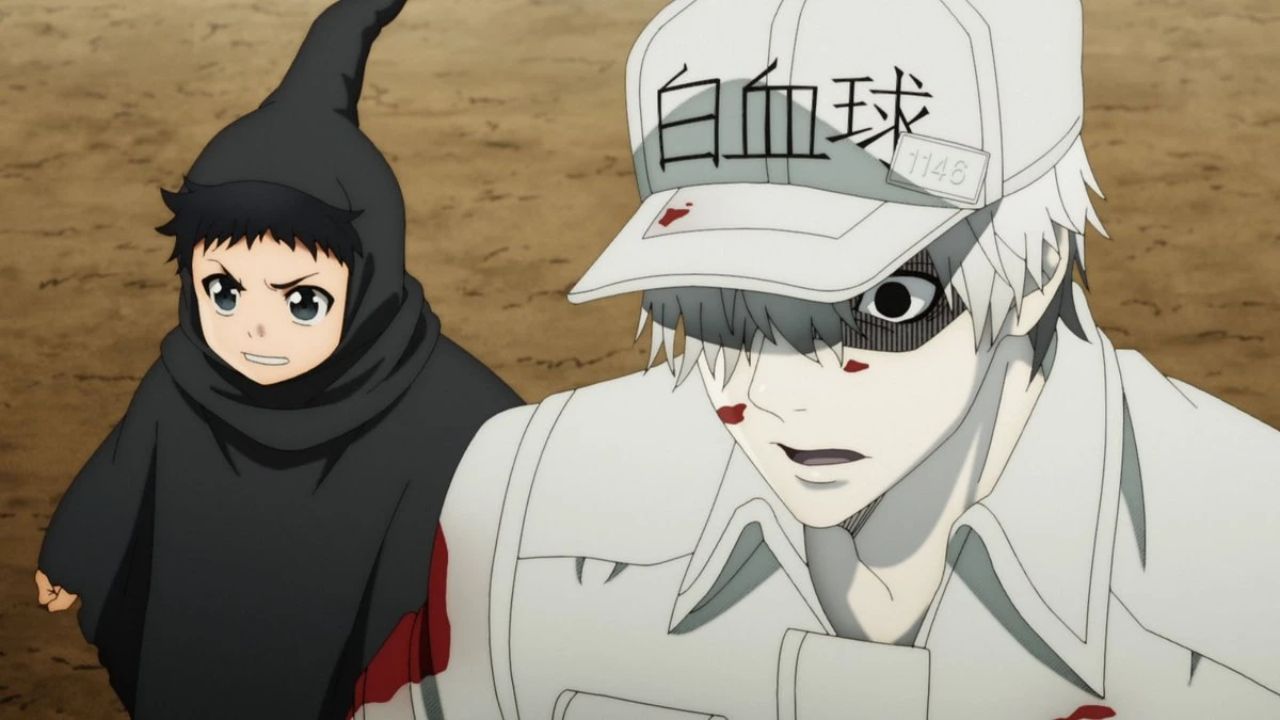
Cells at Work! creator Akane Shimizu has publicly detailed what she describes as years of editorial mistreatment during the manga’s serialization, alleging repeated failures to address concerns regarding medical supervision of the series, inadequate production support, and treatment that contributed to severe mental health struggles.
The manga artist shared the allegations across a series of posts on X on July 1 and 2, clarifying that the account is unrelated to her recent statements regarding alleged sexual assault and represents her personal recollection supported by documents from the time.
According to Shimizu, the issues began in 2014 around the launch of Cells at Work! when her editor, identified only as “Mr. A,” told her the manga would receive medical supervision.
She said she proceeded with the understanding that a medical supervisor would review and correct inaccuracies before publication.
However, as the first collected volume neared release without any corrections, she sought confirmation from her editor and was reportedly told, “It’ll be fine.“
When the first volume was released in 2015, Shimizu said it contained numerous medical inaccuracies and did not list a medical supervisor. She alleged that readers criticized her research, prompting her to ask the editorial department to improve the supervision system.
According to Shimizu, her editor dismissed the request, saying, “It’s just a manga, so being rough/inaccurate is fine.“
She said she subsequently purchased numerous medical reference books at her own expense while continuing serialization, but never received corrections from the promised supervisor.
During the same period, she also claimed the editorial department failed to introduce professional assistants, forcing her to hire former classmates, some of whom refused key production tasks, resulting in repeated overnight work to meet deadlines.
Shimizu said the situation worsened in the following years.
Repeated requests for better support went unanswered:
In 2016, after readers wrongly accused her of relying too heavily on assistants due to declining artwork quality, she requested professional assistants for a second time.
She alleged her editor instead criticized her personality, telling her she needed to stop “blaming other people,” while dismissing further complaints about the unresolved medical supervision issues.
Shimizu wrote that the repeated refusals and personal criticism left her so overwhelmed that she contemplated jumping in front of an express train.
She said she requested improvements again in 2017 and was promised changes, but none materialized.
The creator alleged that problems continued into 2018, shortly before the anime adaptation premiered.
After making a fourth request to improve the medical supervision system, she said a formal meeting resulted in promises to address the issues, but no changes followed.
The author further claimed that aspiring manga artists, rather than professional assistants, were assigned to her, leaving fundamental production problems unresolved.
Editorial treatment led to depression and suicide attempt:
During work on the final chapter of a long story arc, Shimizu alleged that her editor requested significant story changes based on objections from the medical supervisor without sharing the supervisor’s specific concerns or medical reasoning.
When she objected to both the timing and nature of the revisions, she said the editor called her and berated her, telling her she lacked the ability to resolve the story and that “everything you do is unnecessary.“
According to Shimizu, the incident left her unable to move her hands, and she was later diagnosed with depression, leading to the manga entering hiatus.
During that break, she said she made a fifth request to improve the medical supervision system and a fourth request for professional assistants, while also suggesting it would be better for both parties if she ended the serialization because her “personality” did not meet editorial expectations.
Shimizu also claimed the publicly announced reason for the hiatus differed from what she was told privately.
While the break was presented on social media as preparation for a better serialization environment, she alleged that the editor-in-chief of Monthly Shonen Sirius and her editor instead attributed the hiatus to her lack of experience, saying she had run out of ideas and needed to “go out and have fun” for inspiration.
Shimizu said requests to improve the supervision system were never addressed. She further revealed that she attempted suicide during the hiatus after feeling she was being treated differently from creators working on spin-off projects.
“I came to feel that ‘It’s impossible to communicate with them,’ and ‘The creators of the spin-off series seem to receive proper support, but I’m the only one who isn’t being treated fairly.’ In that state, I fashioned a noose from an extension cord tied to my closet rail and attempted to take my own life by hanging.“
She later said she reluctantly tried to follow her editor’s advice to “grow as a person” to better manage assistants, while proposals to provide assistants with educational resources and housing were rejected.
“Mr. A also instructed me to ‘control your assistants with carrots and sticks.’ Meanwhile, the assistants came to believe, ‘Shimizu is having trouble with the editors, so we can’t rely on her.‘”
When serialization resumed in 2021, Shimizu said she had already decided to conclude the series because the editorial department had still not addressed the supervision issues.
She cited another incident in which an entire chapter incorrectly identified a type of cell without corrections being made before publication, reinforcing her belief that no meaningful improvements would occur.
She also alleged that editorial demands regarding manuscript length were contradictory, ultimately stating that the serialization ended due to the cumulative mental strain.
“Mr. A made demands such as ‘make it as long as you want, but write it exactly like this’ and ‘actually, it’s too long, so rewrite it to be about 20 pages shorter.‘”
She is now working with Kodansha to resolve the matter:
Shimizu said she is currently in discussions with Kodansha regarding the matter.
At the same time, she emphasized that all spin-offs, collaborations, licensed projects, and new works have proceeded only after receiving her approval, and that she has built a positive relationship with her current editor.
Explaining why she chose to come forward now, Shimizu said she had reached the limit of what she could continue carrying on her own and wanted to publicly organize the events from her perspective while apologizing for causing concern among fans.






![[Exclusive] The Great Indian Anime Show: The Journey Behind India’s First Ever Anime Talk Show](https://animehunch.com/wp-content/uploads/2026/01/Analyst6-150x150.webp)