
During the second Aichi Nagoya International Animation Film Festival (ANIAFF), which is currently being held in Nagoya, Japan, Fullmetal Alchemist, Mobile Suit Gundam 00, and Expelled from Paradise director Seiji Mizushima joined game AI developer and Tokyo University of the Arts professor Yoichiro Miyake to discuss depictions of artificial intelligence in anime and the use of generative AI in the industry.
Mizushima reflected on how he has accepted technological shifts alongside anime over the decades, such as computers speaking like humans, connecting to networks, and forming collective intelligence.
He stated that when generative AI emerged, he initially expected the technology to produce new ideas and visuals that he could not imagine on his own.
However, Mizushima expressed disappointment with current generative AI outputs, calling it a waste that the technology only ends up producing inferior versions of things humans have already thought of based on collected data.
“I think it’s a waste because all we’re getting are inferior versions of things that were conceived by humans based on the collected data,” the director said.
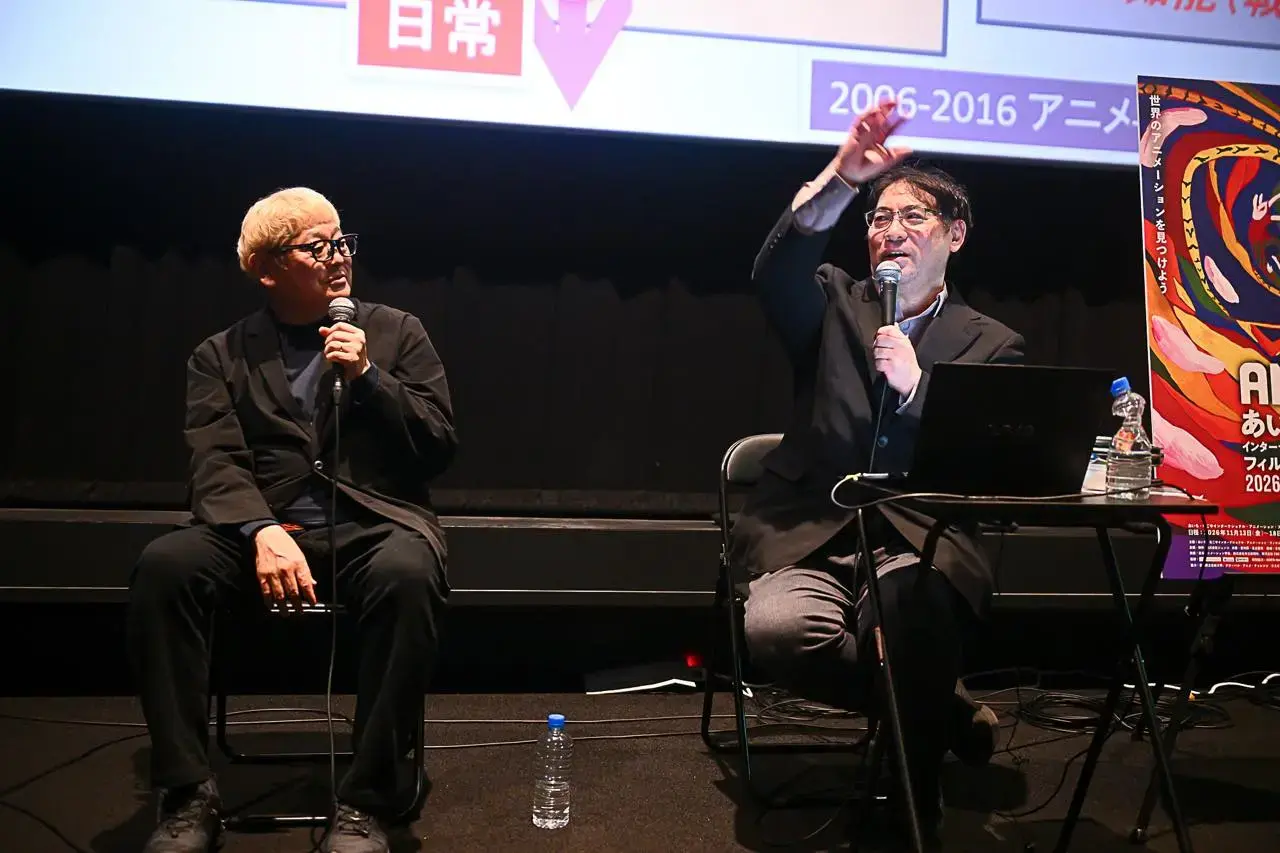
When Mizushima asked whether AI research is progressing toward generating concepts beyond human imagination, Miyake explained that because humans evaluate and select AI outputs, the models become biased toward conventional human common sense.
In another related panel held during the event, Graphinica president Nao Hirasawa noted that trends in the game industry quoting a 2026 survey which showed 63 percent of developers using generative AI daily amid workplace division.
According to him, this trend will eventually reach the anime sector, meaning more and more staff in the industry will start relying on AI tools in the future.
Hirasawa pointed out that the challenge in such times will be to resolve friction between creators who adopt new tools and those who do not, while adding that there is currently a shift toward animators building their own specialized, small-scale production tools.
Despite pushback against AI, multiple studios are testing or using it to optimize backend production workflows.
In May 2025, Toei Animation announced an investment in Japanese AI company Preferred Networks to develop AI assistance for storyboarding layouts, automated color specification and correction, in-between line cleanup, and converting location photos into anime backgrounds.
Similarly, OLM Digital is testing AI workflow tools with over 10 major studios through its ANIMINS research project, whereas Nagoya-based K&K Design uses custom AI models to speed up background drafting and transitional poses before human retouching.
These studios are not alone in experimenting with AI, as Sony and in extension Crunchyroll have used the technology for various processes, including subtitling.
Japan even released an anime, Twins HinaHima, in 2025, promoting it as the first anime to use AI assistance across more than 95 percent of its production. Meanwhile, WIT Studio has also faced backlash in recent times using AI Generated background cuts in the opening of Ascendance of a Bookworm Season 4 earlier this year.
Additionally, the Japanese government has backed AI localization to boost exports and curb piracy, with the Ministry of Economy, Trade and Industry’s Japan Investment Corporation and Shogakukan investing 2.92 billion yen ($19 million) into AI manga translation startup Orange Inc. in May 2024.
This was followed by a reported 11.5 billion yen ($70 million) government subsidy in June 2026 to encourage publishers like Shueisha and Kodansha to adopt AI translations.
Source: Kai-you